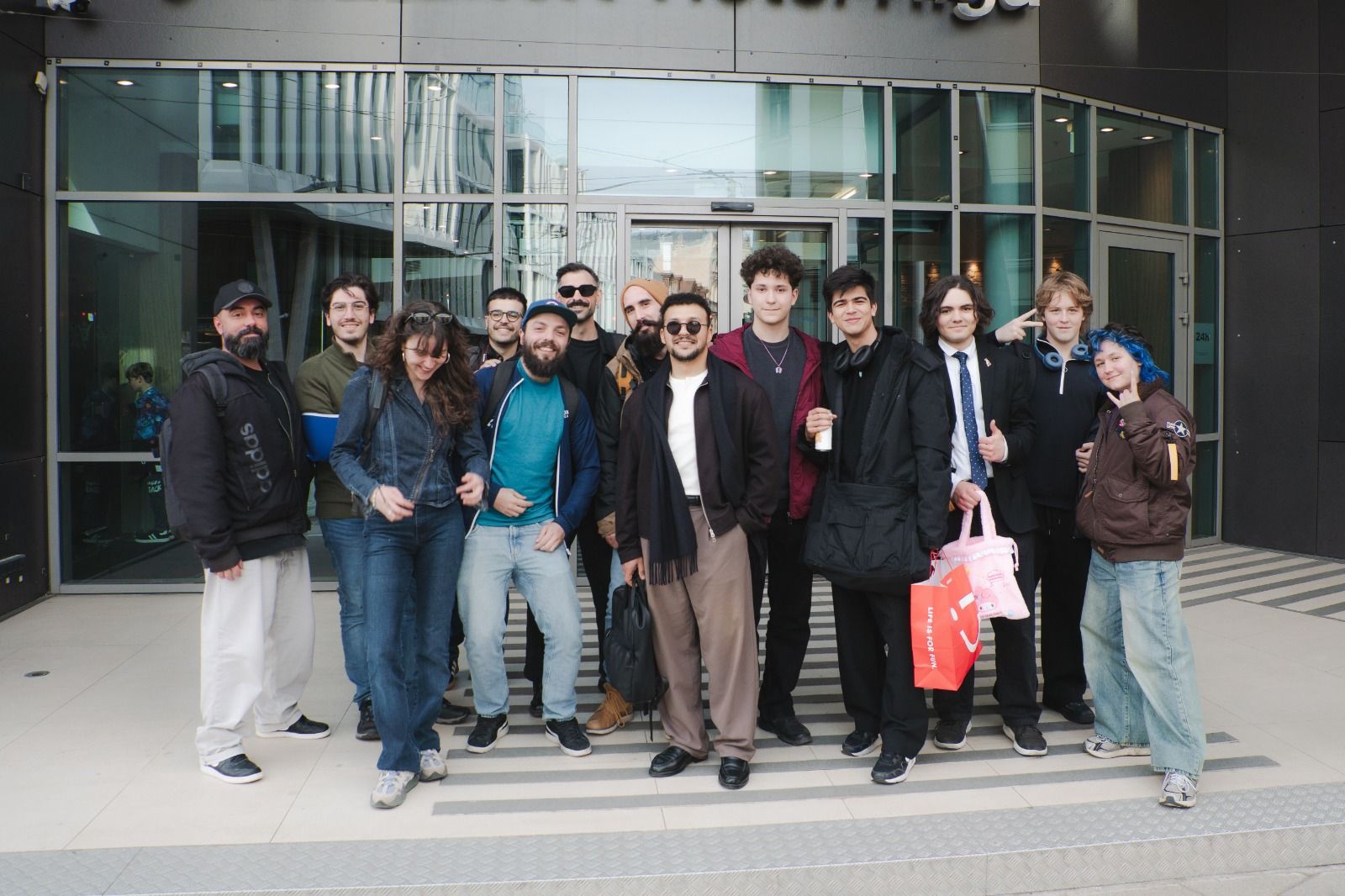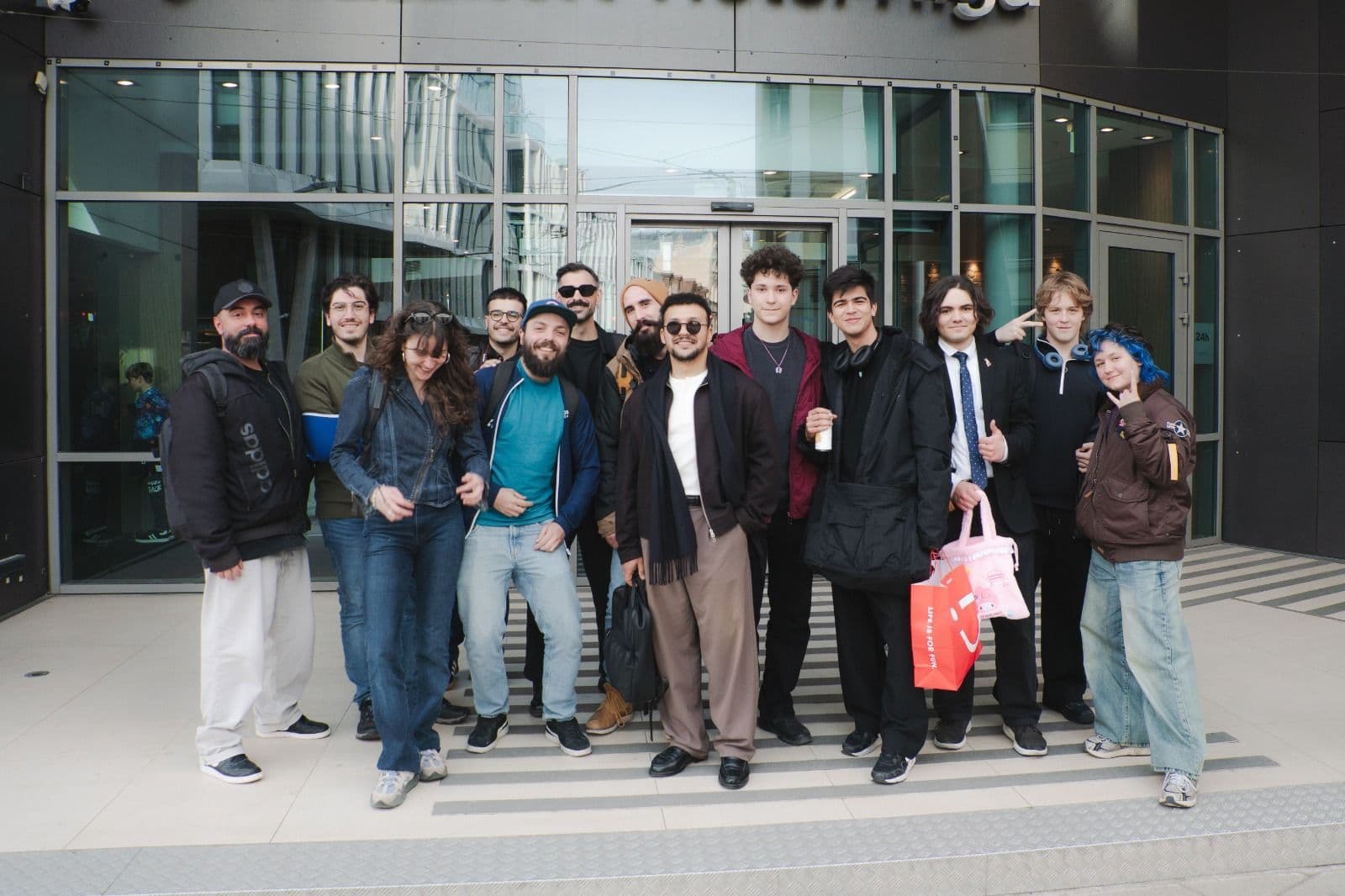
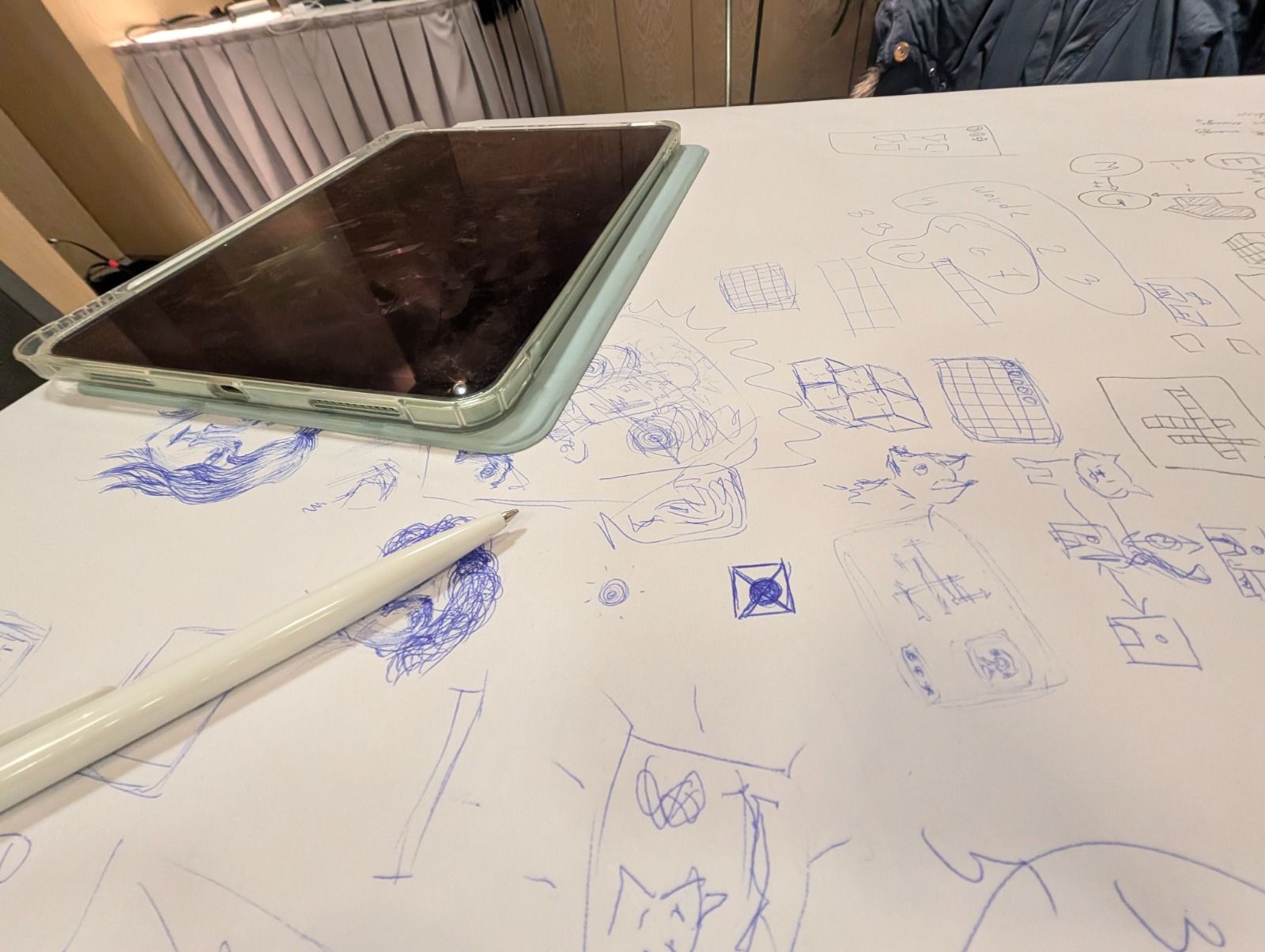
The International Hackathon on Active Ageing and Digital Skills, hosted in Riga as part of the European project “Active Ageing in the Digital Age”, represented one of the most significant moments in the research, exchange and experimentation process carried out over the previous months between Italy, Latvia and Lithuania. Coordinated by MIHI Latvia, the event brought together professionals from the digital, design and video game sectors from Italy through VLK Studio, together with Lithuanian high school students specialising in design and digital arts, involved thanks to the collaboration of the partner EPIONE. This international and intergenerational composition turned the hackathon into something broader than a simple design laboratory: it became a space for work, mutual learning, professional orientation and European cooperation.
The work carried out in Riga was part of the final phase of the Erasmus+ project “Active Ageing in the Digital Age”, dedicated to promoting the digital inclusion of people over 65 through playful tools, accessible technologies and participatory methodologies. After the focus groups, the Living Labs and the International Forum in Kaunas, the hackathon had the task of transforming the insights collected in the different partner countries into concrete project concepts, capable of responding to real needs rather than to an abstract idea of innovation. The starting point was clear: to imagine digital solutions that would not ask older people to adapt to complex tools, but would instead build experiences that are simpler, more understandable, more motivating and closer to everyday life.
Over the previous months, the project had shown that the issue of digital inclusion for older adults is not only about access to devices. Trust matters, the clarity of interfaces matters, the simplicity of interactions matters, and so does the social meaning of the proposed experience. Many participants over 65 expressed curiosity towards digital tools, but also fears related to making mistakes, complex menus, the excessive speed of some applications, small buttons or the lack of clear instructions. At the same time, cooperative activities, familiar games, nature-based themes and experiences without time pressure showed strong potential in supporting participation, motivation and wellbeing.
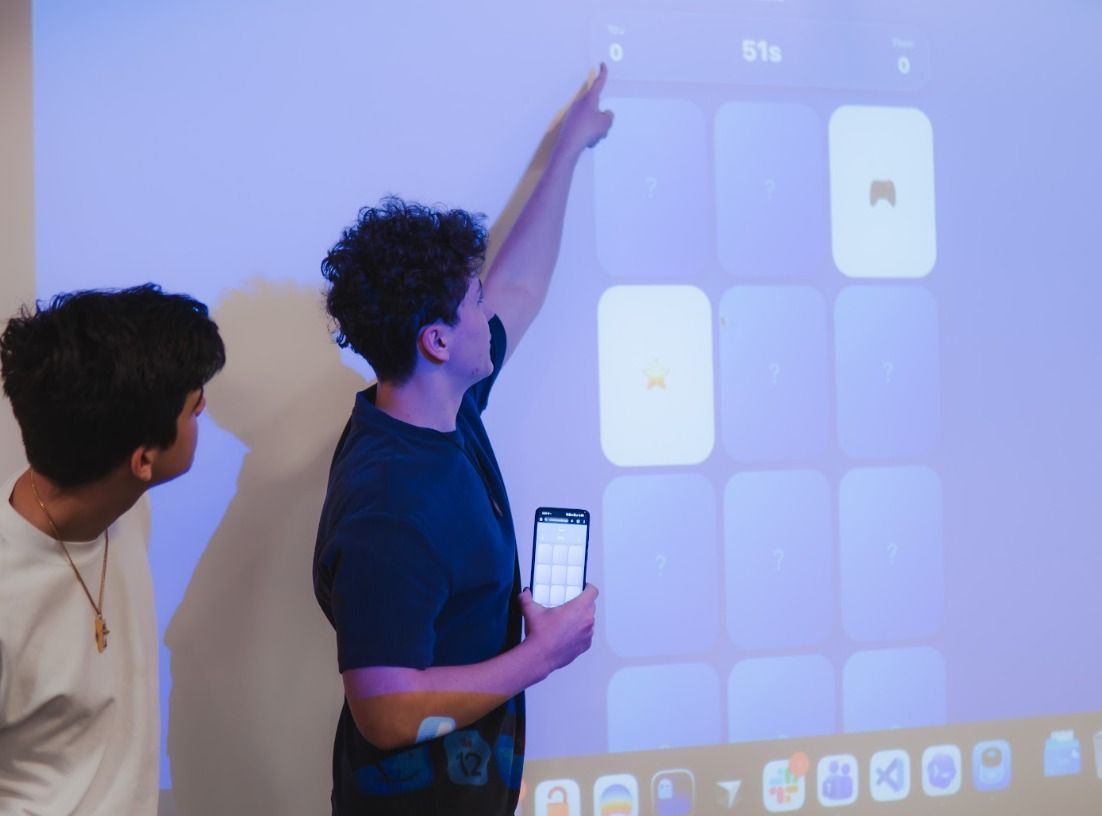
Starting from this evidence, the hackathon participants were divided into mixed working teams made up of professionals and students. This methodological choice played a central role in the development of the final concepts, because the collaboration between people with different skills and experiences encouraged a continuous dialogue between technical ability, design sensitivity and generational perspective. The students were able to actively contribute to the definition of the ideas, taking on a concrete role in the teams’ decision-making processes and experimenting with forms of youth leadership based on project ownership, proactivity and shared responsibility. For VLK Studio, this was one of the most relevant elements of the experience: the hackathon showed how an international activity can become a tool for professional orientation and growth, as well as an opportunity for project development.
The exchange with digital professionals, designers, developers and game designers allowed the students to engage with real working dynamics: from idea generation to the definition of the user experience, up to the final presentation of the concepts. Beyond the moments dedicated to design, the event also encouraged the creation of relationships between participants through joint activities, visits to points of interest in the city of Riga, informal leisure moments and shared meals. These spaces also played an important role, helping to strengthen collaboration between the groups and creating a climate of trust and exchange that supported the creative work. In a project centred on inclusion, participation and intergenerational dialogue, the informal dimension was not an accessory element, but an integral part of the experience.
Three main proposals emerged during the hackathon: Bruco, Digital Garden and CareMotion. Although developed by different teams, the three ideas shared the same underlying focus: designing technologies that do not place older people in front of complex tools, but instead transform the digital experience into something simple, meaningful and respectful.
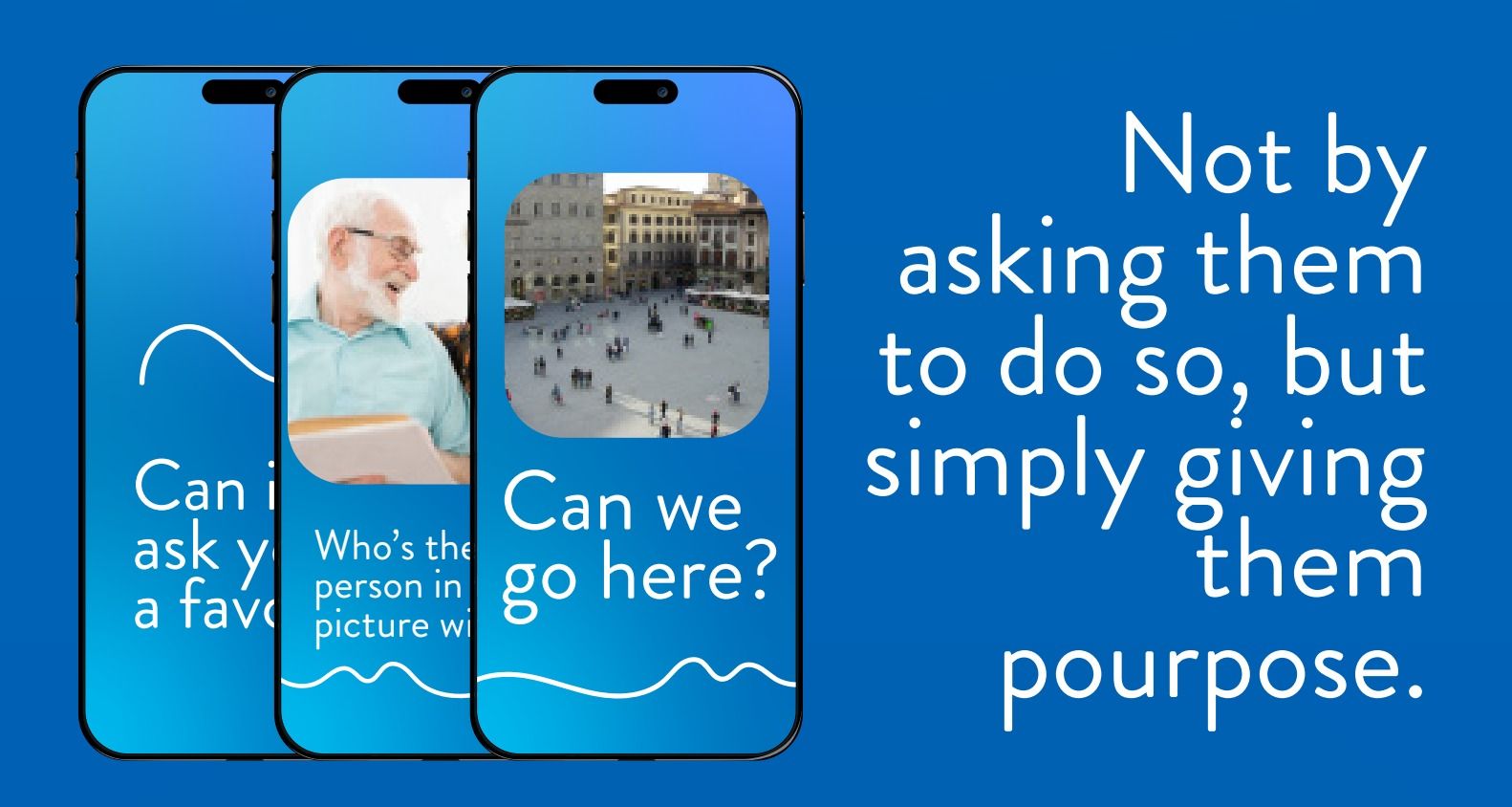
Bruco was conceived as a mobile digital companion based on a gentle daily interaction. The idea starts from the need to support small positive habits in the lives of older people: moving, keeping memory active, talking with family members or friends, breathing calmly, and maintaining a daily rhythm. The system imagined by the team does not present itself as a medical app or as a productivity tool, but rather behaves as a discreet presence, capable of proposing one small activity each day and valuing continuity without pressure, punishment or judgement.
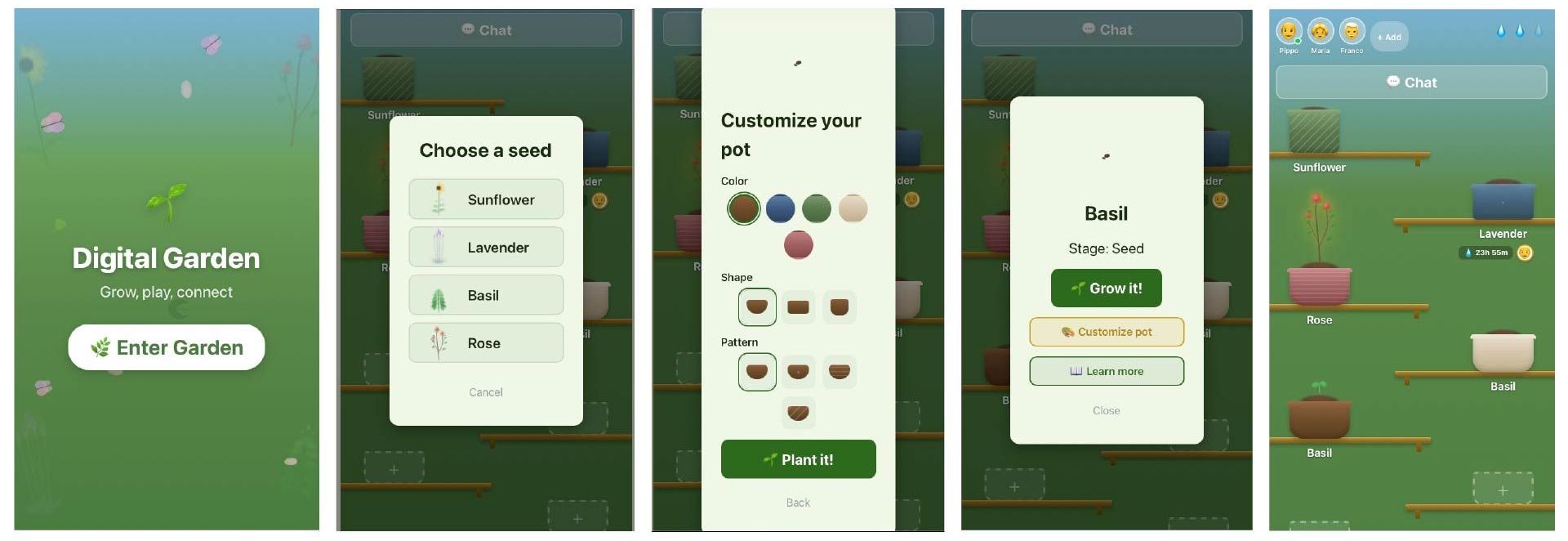
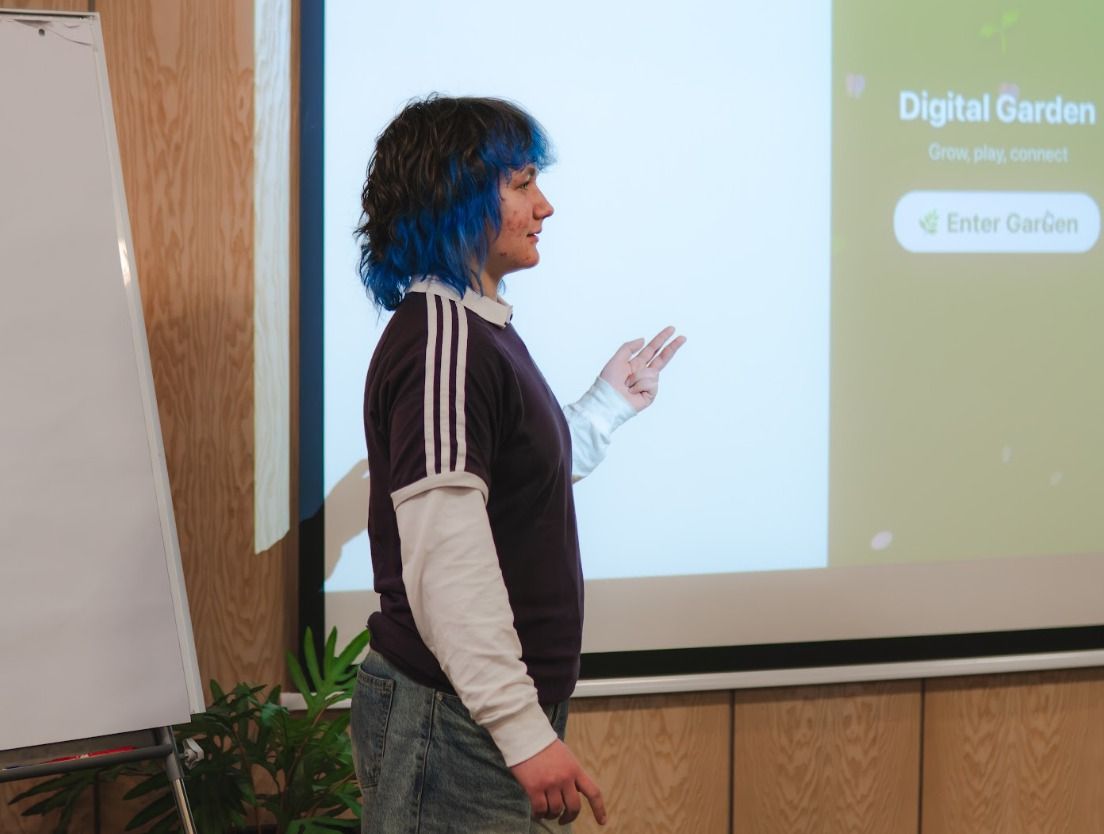
Digital Garden instead developed the theme of social connection through a natural and cooperative metaphor. The concept proposes a shared digital garden where older people can grow plants by solving simple and familiar puzzles, either alone or together with family members and friends. The idea places care, collaboration and a sense of belonging at the centre: each plant becomes the result of a small gesture repeated over time, but also an opportunity to receive messages, leave reactions, share progress and keep contact with other people alive. In this sense, the game is not understood as an escape from reality, but as a light space through which relationships, participation and positive routines can become easier.
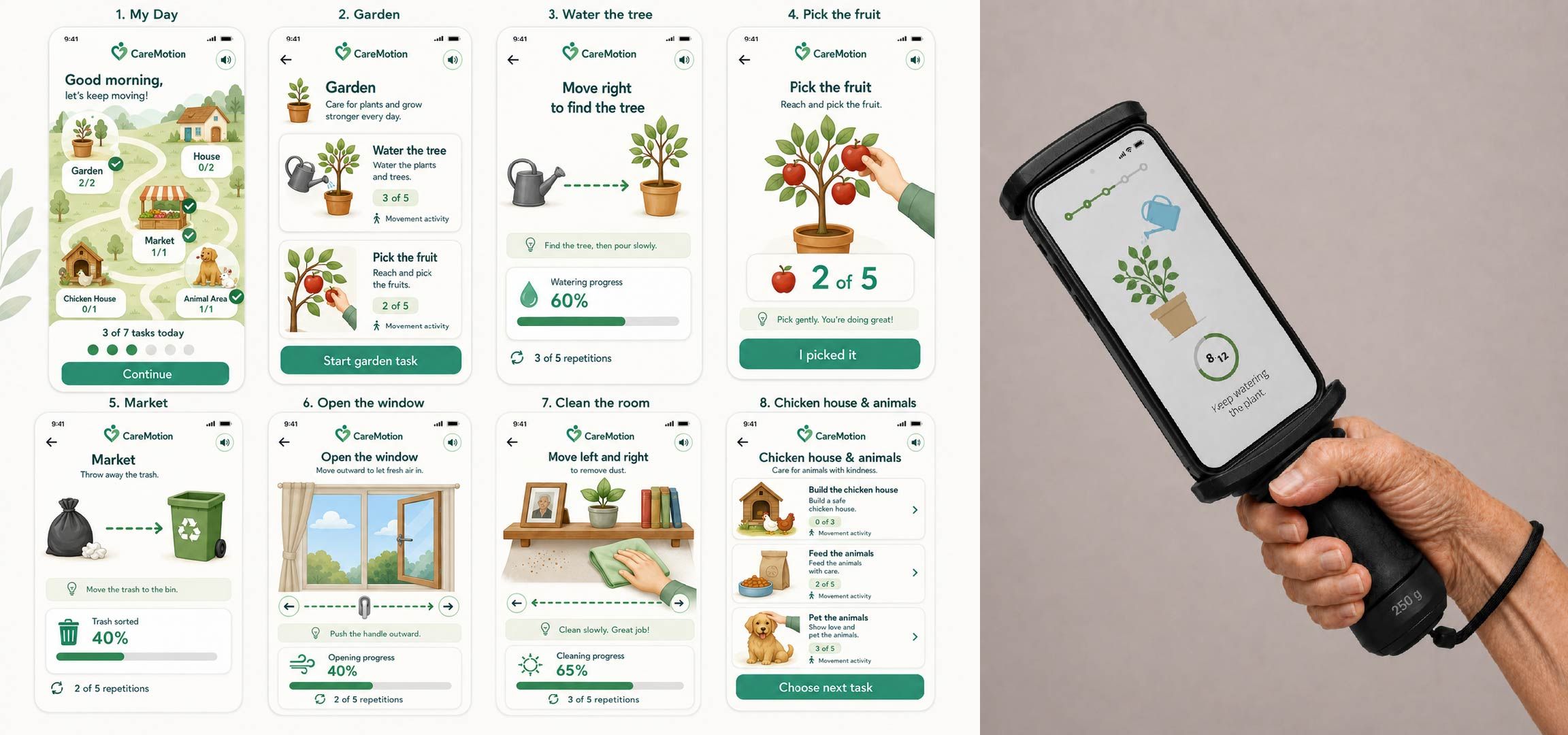
CareMotion, the winning idea of the hackathon, proposed a physical-digital ecosystem dedicated to guided movement and senior-friendly rehabilitation. The concept combines a mobile application with an ergonomic hardware support, designed to transform the smartphone into a tool for motor interaction. Through simple activities inspired by everyday life — such as watering a plant, picking fruit or performing small actions on a map — physical movement can be translated into a playful, clear and motivating experience.
The winning idea was selected through a peer-to-peer voting and evaluation process, directly involving the participating teams in the mutual assessment of the concepts. This approach further strengthened the participatory dimension of the hackathon: the final selection was not only an award moment, but also an opportunity for peer exchange, design reflection and recognition of the work carried out by the other groups - all ideas presentations are linked at the bottom of the article.
Following the event, CareMotion entered an advanced prototyping and feasibility study phase. The team began working on the possible development of the hardware components through the use of 3D printers, with the aim of exploring shape, ergonomics, the smartphone mounting system and the possible integration of modular weights. At the same time, further research continued on the software component, with particular attention to interface simplicity, readability, clarity of instructions and the transformation of movements into digital activities that are understandable and rewarding. CareMotion currently remains a concept in a preliminary development and validation phase. Precisely because of its possible connection with therapeutic and rehabilitation contexts, every future evolution will necessarily require the involvement of physiotherapists, doctors, orthopaedic specialists and rehabilitation professionals. This aspect is central: the objective is not to replace clinical work, but to imagine tools capable of supporting it, making some movement activities for older adults more accessible, motivating and understandable.
The Riga hackathon produced results that go beyond the concepts presented. Some students involved in the activity submitted internship requests to the lead partner VLK Studio, which is currently evaluating these applications for 2027. This element shows how Erasmus+ activities can generate concrete impact also in terms of professional orientation, European mobility and the creation of new opportunities for young creatives and emerging professionals. The experience confirmed the value of a design approach based on listening, international cooperation and the cross-pollination of skills: bringing students, digital professionals, designers, game designers, third-sector organisations and European partners into the same space made it possible to observe active ageing not as an abstract topic, but as a concrete challenge of social and technological design.
The digital inclusion of people over 65 requires solutions capable of bringing together accessibility, motivation, relationships and dignity. It is not enough to simplify an interface or make a button larger: it is necessary to build experiences that make sense for those who use them, that reduce the fear of making mistakes, that value existing abilities and that can strengthen connections with others. In this sense, the International Hackathon in Riga represented an important step in the path of “Active Ageing in the Digital Age”. The ideas that emerged — Bruco, Digital Garden and CareMotion — show different but complementary directions for imagining technologies that are gentler, more accessible and more human. At the same time, the work of the teams confirmed that designing for active ageing can also become fertile ground for youth training, professional growth and the construction of lasting European collaborations.
“Active Ageing in the Digital Age” is a project funded by the European Union under the Erasmus+ programme.

Resources:
- Digital Garden idea presentation: https://drive.google.com/file/d/1MErOvU3q5I7_pF2633xZaLNH5hmkPkF4/view?usp=drive_link
- Bruco idea presentation: https://drive.google.com/file/d/1YJEASYOrlh8MulDDhgpvn_031yv8yFf9/view?usp=drive_link
- CareMotion idea presentation: https://drive.google.com/file/d/1Dogf-WKcBihIugVmSJvcPxtdJY_9EIId/view?usp=drive_link
.jpg)
.jpg)
.jpg)
.jpg)
.jpg)